
The low FODMAP diet, explained
The low FODMAP diet is a short elimination diet for IBS. Learn what FODMAPs are, how the three phases work, how long each takes, and the mistakes to avoid.
Written by Llorenç Bauza
·
On this page
The low FODMAP diet is a short elimination diet for people with irritable bowel syndrome (IBS). You cut back on six groups of fermentable carbohydrates for a few weeks, then bring them back one group at a time to learn which ones, and how much of each, your gut tolerates. US and UK gastroenterology guidelines recommend it as a trial for IBS symptoms, ideally with a dietitian.
Who it’s for
The diet is meant for adults whose doctor has diagnosed IBS, and whose symptoms haven’t settled with general advice such as regular meals and less caffeine, alcohol and fatty food. The British guideline treats it as a second step, after that general advice.[2]
It is not a weight-loss diet or a lifelong way of eating. Before you start, see a doctor to rule out other causes of gut symptoms, such as coeliac disease. Get help promptly if you notice blood in your stool, weight loss you can’t explain, or symptoms that wake you at night. The medical disclaimer lists more warning signs.
What FODMAP means
FODMAP stands for Fermentable Oligosaccharides, Disaccharides, Monosaccharides And Polyols. They are short-chain carbohydrates that the small intestine absorbs poorly. They reach the large intestine, where bacteria ferment them and they draw in water. In people with IBS, that can mean bloating, gas, pain and changes in bowel habits.
| Group | Found in, for example |
|---|---|
| Fructans | Wheat bread, onion, garlic |
| GOS | Lentils, beans, chickpeas |
| Lactose | Milk, yogurt, soft cheese |
| Excess fructose | Honey, apples, mango |
| Sorbitol | Apples, pears, stone fruit |
| Mannitol | Mushrooms, cauliflower |
Amount matters as much as the food. Many foods are fine in a small serving and only cause trouble in a bigger one. Each food page shows the amount up to which a food stays low.
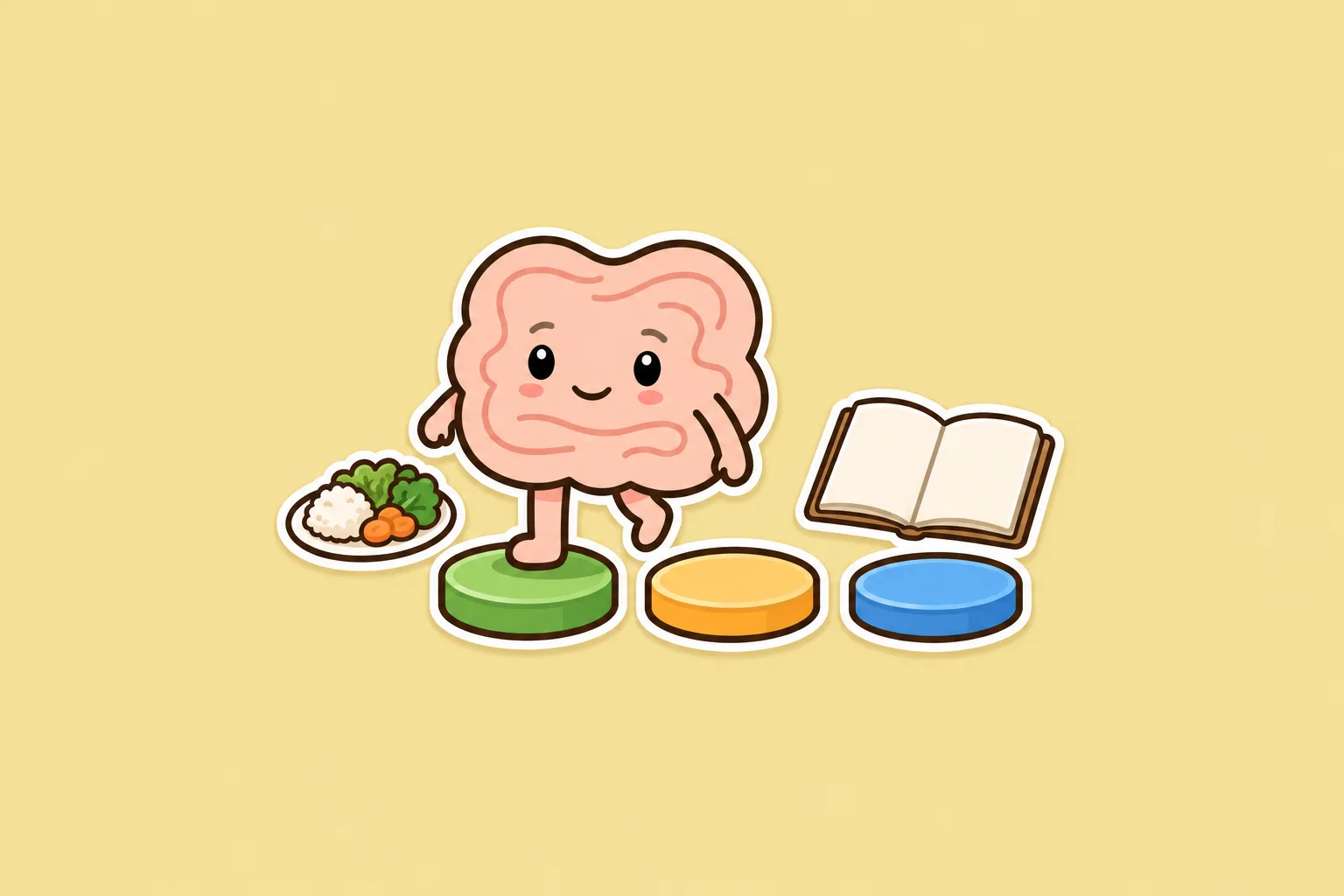
- Cut back2 to 6 weeks of low FODMAP swaps
- ReintroduceOne FODMAP group at a time
- PersonaliseLimit only what bothers you
Phase 1: Cut back
For 2 to 6 weeks, swap high FODMAP foods for low FODMAP ones. The goal is to see whether your symptoms improve, not to eat this way for good.
- Swap rather than skip: rice, potatoes, oats, carrots, eggs, plain meat and fish, and hard cheese are low FODMAP in normal amounts. The low FODMAP food list has more than 160 foods, and there are checked breakfasts, recipes and snacks to start with.
- Watch the hidden ones. Garlic and onion turn up in stocks, sauces, spice mixes and ready meals. Garlic-infused oil gives the flavour without the fructans.
- Mind the total. FODMAPs from several foods in one meal add up, even when each food is low on its own. FODMAP stacking, explained shows how.
- Keep a simple diary of what you eat and how you feel. It makes the next phase much easier.
If your symptoms haven’t improved after about 4 to 6 weeks, the diet may not be the answer for you. Go back to your doctor or dietitian rather than restricting further.
Phase 2: Reintroduce
Once your symptoms have settled, bring the FODMAP groups back one at a time, while the rest of your diet stays low FODMAP.
- Pick one group, and a food that contains mainly that group.
- Eat a small amount on the first day, then a larger amount over the next days, as long as you feel fine.
- Note any symptoms. If they come back, stop that test and wait until you feel settled again.
- Move on to the next group.
This phase is the real test. It tells you which groups bother you and at what amount, which no lab test can (see Is there a test for FODMAP intolerance?). A dietitian can give you a reintroduction plan with exact foods and amounts. Our reintroduction guide goes through it step by step.
Phase 3: Personalise
Bring back everything you tolerate, and limit only the groups and amounts that caused symptoms. Most people end up avoiding far fewer foods than in phase 1.
This matters because many high FODMAP foods are good for you. Fructans and GOS feed helpful gut bacteria, and whole grains, beans and fruit bring fibre and nutrients. Guidelines warn against staying on the strict phase long term.[2]
Does it work?
In trials, many people with IBS report less bloating, pain and urgency on a low FODMAP diet. The American College of Gastroenterology recommends a limited trial of it to improve IBS symptoms, while rating the quality of evidence as very low.[1] The British Society of Gastroenterology and NICE recommend it as a second-line option, best done with a dietitian.[2][3] It doesn’t help everyone, and it doesn’t treat the cause of IBS.
Common mistakes
- Staying in phase 1 for months. The strict phase is a test, not a diet for life.
- Cutting whole foods instead of portions. A small serving of many “high” foods is fine. Check the amount on each food page.
- Missing garlic and onion in sauces and ready meals. They are the most common hidden sources.
- Testing two groups at once. If symptoms come back, you won’t know which group caused them.
- Relying on IgG food tests. They don’t identify food intolerances.
How Fodmi helps
Fodmi is an iPhone app that makes the diary part easier. You log a meal with a photo, your voice or text, see its estimated content across the six FODMAP groups, and check in later on how it sat. Over a few weeks, it shows which foods line up with bad days, and you can share a PDF report with your doctor or dietitian. Fodmi’s amounts are estimates from published food composition data, using the low FODMAP cut-offs of Varney et al.[4] It doesn’t replace a dietitian’s plan.
Check your whole plate, not just one food
FODMAPs add up across a meal. Snap your plate in Fodmi to see the total, then check in later on how it sat.

Keep reading


Sources
- Lacy BE, Pimentel M, Brenner DM, et al. ACG Clinical Guideline: Management of Irritable Bowel Syndrome. Am J Gastroenterol. 2021;116(1):17–44. doi.org/10.14309/ajg.0000000000001036
- Vasant DH, Paine PA, Black CJ, et al. British Society of Gastroenterology guidelines on the management of irritable bowel syndrome. Gut. 2021;70(7):1214–1240. doi.org/10.1136/gutjnl-2021-324598
- National Institute for Health and Care Excellence. Irritable bowel syndrome in adults: diagnosis and management (CG61). www.nice.org.uk/guidance/cg61
- Varney J, Barrett J, Scarlata K, et al. FODMAPs: food composition, defining cutoff values and international application. J Gastroenterol Hepatol. 2017;32 Suppl 1:53–61. doi.org/10.1111/jgh.13698
Fodmi estimates FODMAP content from published food composition data. It is not medical advice. Tolerance varies from person to person; follow a low FODMAP diet with a qualified health professional.